
AI Native Medhavi Newsletter ·
AI-Powered Apps, Governance Tools, and Trust in Agent Infrastructure
Emerging Tools For AI Governance
Top Stories
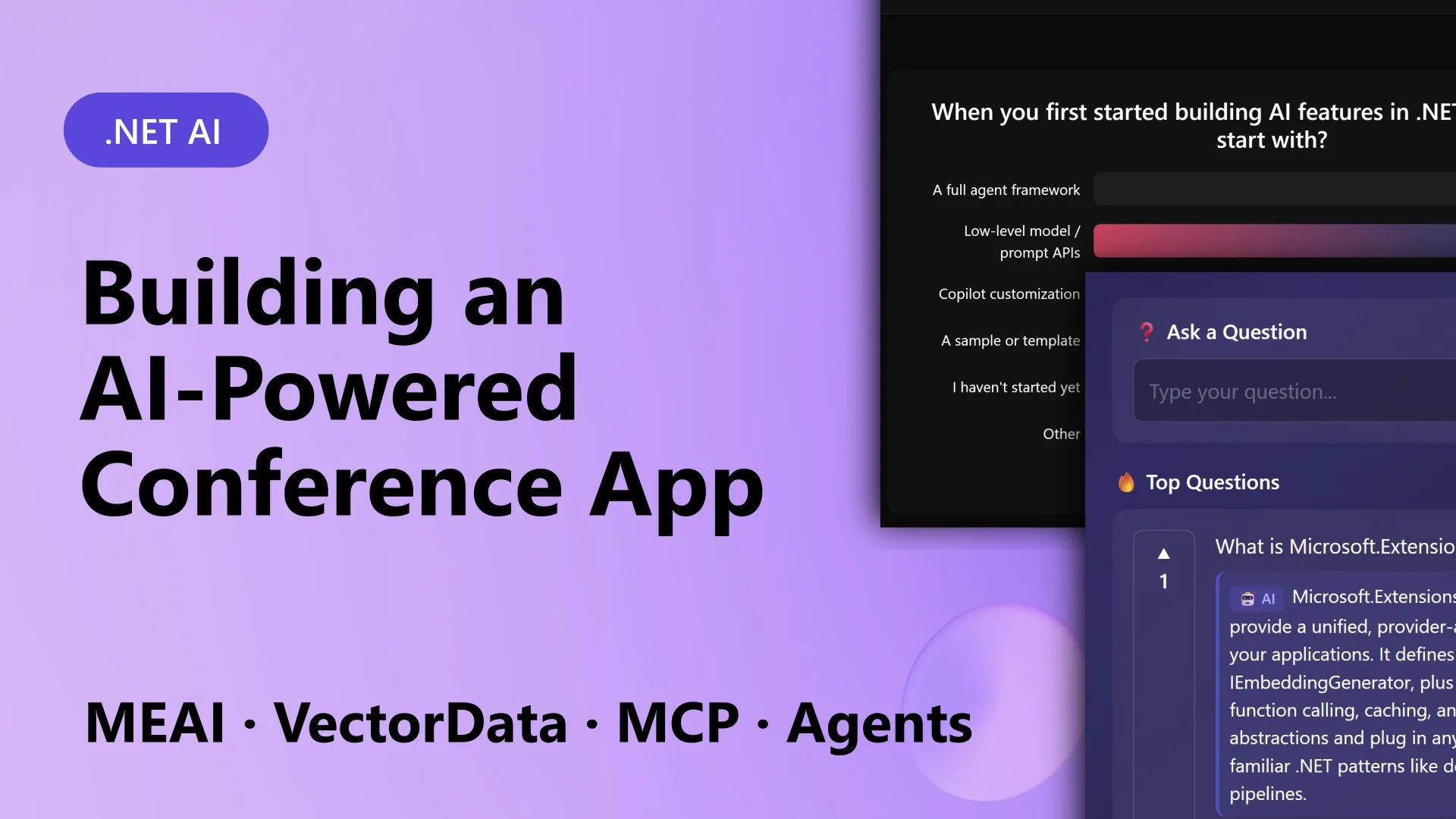
The article from the Microsoft .NET AI Blog details the development of ConferencePulse, an interactive conference assistant built using Microsoft’s AI technologies, including Microsoft.Extensions.AI and Model Context Protocol (MCP). The app facilitates live audience engagement through AI-generated polls and Q&A sessions, analyzing data from multiple agents to produce insights and summaries in real time. It is part of a broader initiative to standardize composable building blocks within .NET applications, enhancing AI integration without facing compatibility issues that arise from disparate ecosystems.
Microsoft .NET AI Blog
The Agent Governance Toolkit (AGT) for .NET introduces a governance layer for AI agents utilizing the Model Context Protocol (MCP), targeting .NET 8.0 and supporting MIT licensing. Key features include McpGateway for tool call evaluations, McpSecurityScanner for detecting suspicious definitions, and McpResponseSanitizer for prompt-injection protection. AGT aims to enhance the security and reliability of AI tool execution by enforcing policy checks and validating tool inputs before they reach the model. The AGT .NET package requires no external services and focuses on maintaining consistent governance across agent workflows.
Microsoft .NET AI Blog
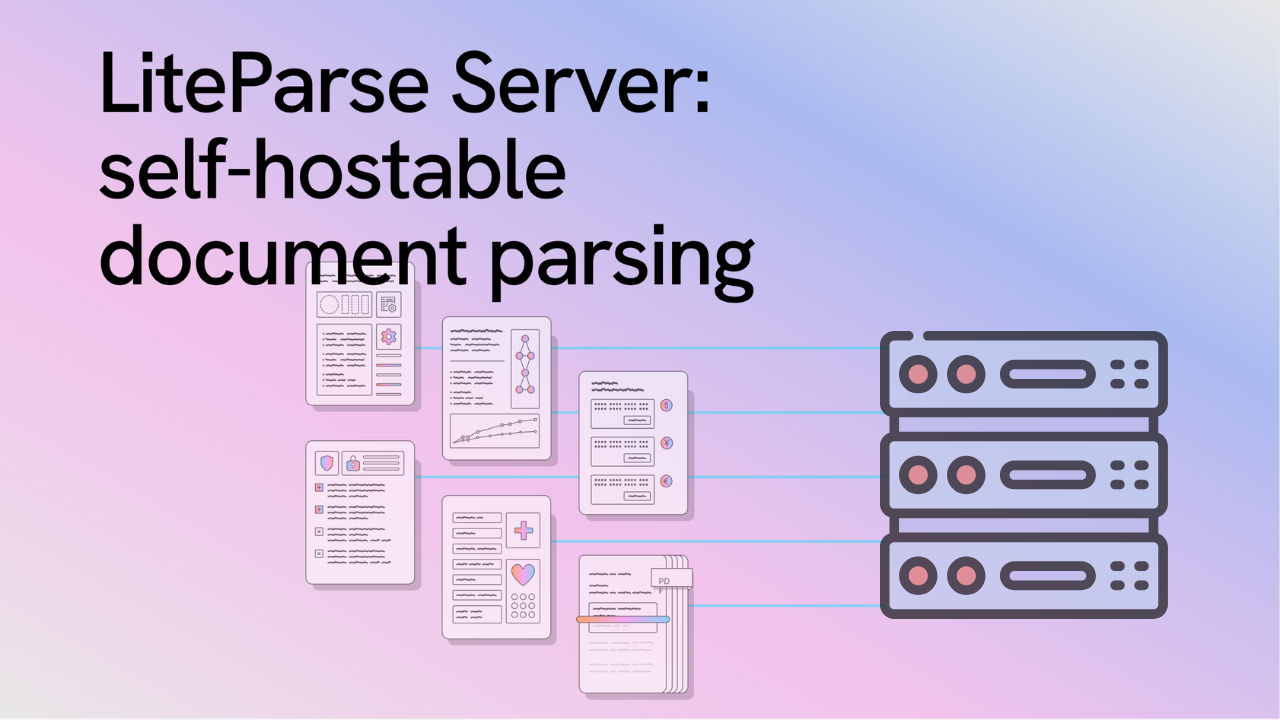
The LiteParse Server from LlamaIndex facilitates self-hosting for document parsing tasks, designed for organizations requiring complete control over their document processing. It supports various document formats and aims to streamline the parsing workflow with customizable templates. Through the use of pre-trained models, the server allows users to process documents quickly, with claims of handling up to 10,000 documents per day without significant latency. LiteParse Server emphasizes privacy and data security by enabling users to keep all data in-house.
LlamaIndex Blog
The article discusses the Exa integration with the Strands Agents SDK, designed to enhance the capability of web search-enabled AI agents used for applications such as research and fact-checking. This integration streamlines information retrieval by providing structured content directly usable in LLM context windows, bypassing the need for post-processing. The Exa integration features two core tools: exa_search for semantic search across various categories, and exa_get_contents for retrieving full content from URLs. The Strands Agents SDK employs a model-driven approach, allowing developers to simplify workflows by letting the model autonomously select tools and determine task completion.
AWS AI Blog
NVIDIA engineers and researchers are leveraging OpenAI's Codex alongside GPT-5.5 to develop production systems and execute research experiments. This collaboration allows teams to seamlessly convert theoretical concepts into functional applications. The integration of Codex streamlines their workflows, enhancing efficiency and productivity in software development. As a result, teams are able to ship innovative products that incorporate advanced AI capabilities.
OpenAI Blog
NVIDIA and SAP have expanded their collaboration to enhance enterprise systems with specialized AI agents that prioritize security and governance. This partnership was announced at SAP Sapphire, where SAP will integrate NVIDIA's OpenShell—an open-source runtime—into its Business AI Platform. OpenShell provides a secure environment for deploying AI agents, ensuring policy enforcement and operational safety. This collaboration aims to facilitate the transition from AI assistants to autonomous agents across critical business workflows, covering areas such as finance, procurement, and supply chain management.
NVIDIA AI Blog
Community Insights
Agents
The OpenClaw 2026.5.12-beta.2 release includes enhancements aimed at improving functionality, focusing on user experience and streamlining provider streams for OpenAI compatibility.
OpenClaw Releases
IBM emphasizes a shift in enterprise agent infrastructure towards integrated orchestration and control, facilitating streamlined agent operations.
Agent Mag
AWS is introducing a new agent toolkit designed to provide managed infrastructure for agent support, transitioning from ad-hoc examples to a standardized framework. This initiative may streamline the development process for builders but simultaneously introduces challenges concerning trust, vendor lock-in, and runtime control. The toolkit aims to enhance the production path for developers, ensuring better integration and deployment of agent-based systems. As AWS continues to refine its offerings, the implications of this transition on developers and their operations are significant.
Agent Mag
According to Capgemini's agentic AI survey, enterprise demand for AI agents is increasing rapidly, with over 75% of enterprise executives expressing a desire to adopt agentic AI solutions. However, the survey highlights that the most significant barriers to this adoption are not related to model access but rather to issues concerning autonomy control, data readiness, observability, and trust. The findings suggest that enterprises are struggling to implement these technologies effectively due to these constraints, indicating a need for solutions that can address such challenges.
Agent Mag
The article discusses the evolving focus of AI agents from generic productivity tools to relationship-building capabilities. It emphasizes the necessity for designers to consider elements such as identity, consent, timing, and measurable trust in the development of these agents. The framework proposed aims at enhancing the functional aspects of agents by integrating workflows that support better relationship dynamics instead of solely refining prompt designs.
Agent Mag
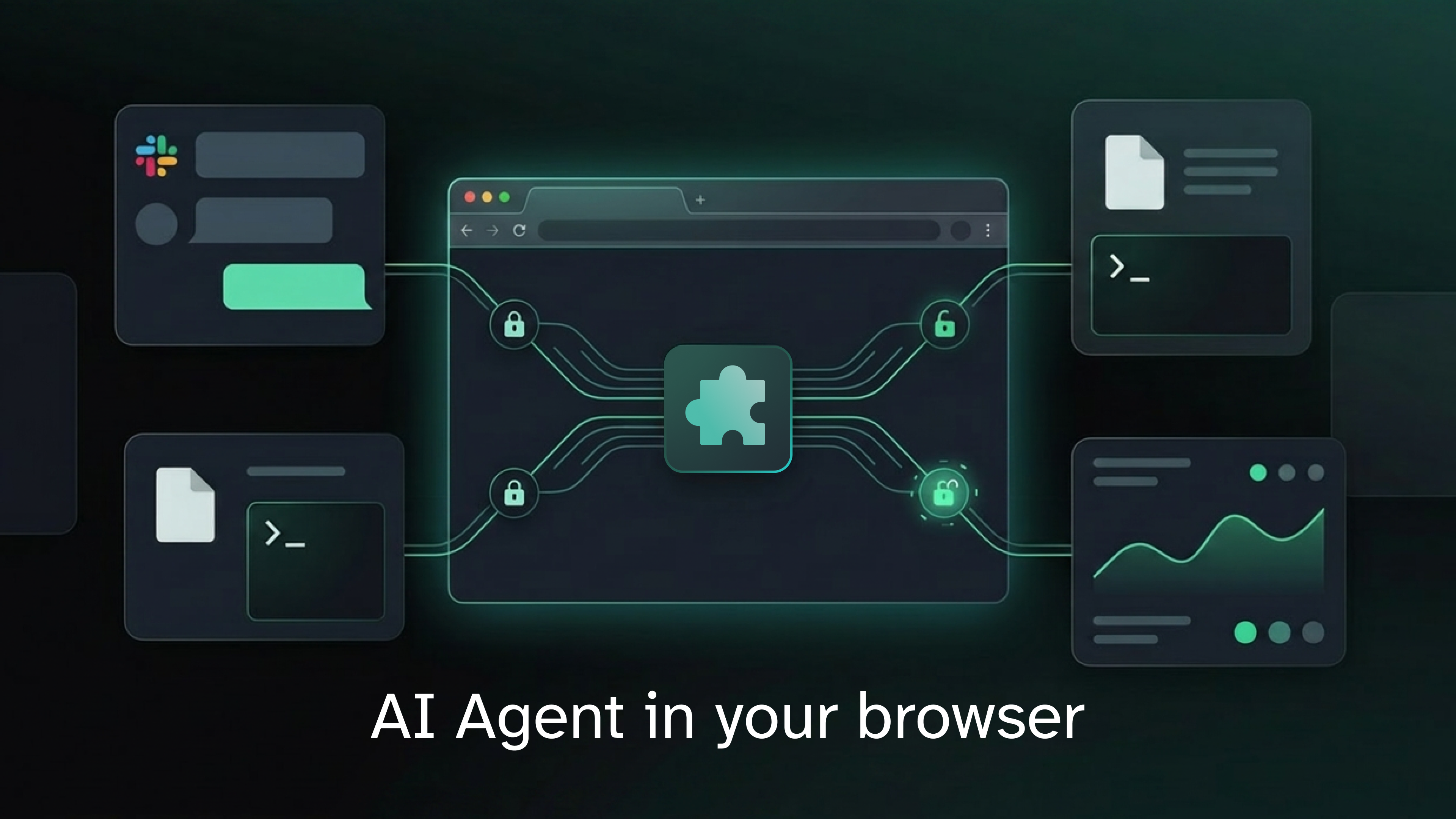
The article discusses the limitations and potential of AI agents that are designed to operate directly within user environments, such as web browsers, rather than relying on external cloud infrastructures. It emphasizes the frustration developers feel when restricted by the capabilities of AI agents in platforms like Slack, especially when those restrictions come from administrative barriers. The author, who will speak at DevCon on June 1st, proposes that browser-native agents could become essential for AI workflows, suggesting a paradigm shift in where and how AI agents operate.
Tessl Blog
A new public sector AI infrastructure report highlights a significant shift for AI agent builders, indicating that their production value is increasingly reliant on factors such as data access and operational trust rather than just prompt engineering techniques. The report suggests that challenges in hybrid deployment and cost control are becoming more prominent in the development of AI agents. This shift underscores the need for improved infrastructure to support the evolving demands of AI agent production in a more sustainable manner.
Agent Mag
Tools & Launches
GitHub enhances Copilot's code review by grouping comments and prioritizing feedback, aiming to streamline the review process for larger pull requests.
GitHub Changelog

Meta enhances parental controls on Instagram, allowing insights into teens' interests and enhancing understanding of algorithm changes.
Meta AI Blog
Models
The Claude Code version 2.1.140 introduced enhancements and bug fixes improving toolset functionality, user experience, and agent stability.
Claude Code Changelog
The llm 0.32a2 release brings significant integration enhancements, improving response accuracy and speed for AI-assisted coding.
Simon Willison
The EU AI Act requires organizations fine-tuning large language models (LLMs) to track computational resources in floating-point operations (FLOPs) for compliance. Amazon SageMaker AI offers a managed service to facilitate this, with the introduction of the Fine-Tuning FLOPs Meter for compliance tracking. This tool integrates into existing SageMaker AI pipelines and allows users to determine their compliance status with a simple configuration flag. Importantly, organizations must assess whether their modifications reclassify them from downstream users to GPAI model providers based on their fine-tuning compute consumption, following the one-third rule of substantial modifications.
AWS AI Blog

Thinking Machines has introduced TML-Interaction-Small, a 276 billion parameter mixture of experts (MoE) model designed to enhance real-time voice applications. This new model, which includes 12 billion active parameters, aims to significantly improve state-of-the-art capabilities by processing audio and image inputs in under 200ms, similar to Meta's Chameleon system. The release was timed alongside a talk by Neil Zeghidour on the future of real-time voice technology, and includes demos showcasing the model's ability to handle continuous streams of microturns at 200ms intervals, positioning it as a competitor against existing voice activity detection (VAD) systems.
Latent Space
Worth Reading
ExecuTorch provides hands-on labs that help ML developers deploy models on constrained edge devices, enhancing local AI inference capabilities.
PyTorch Blog
With AI agent capabilities expanding, there is a growing need for them to engage in compute-intensive tasks to justify current infrastructure developments.
Agent Mag

The article discusses the integration of foundation model training and inference capabilities on AWS through a partnership with Hugging Face. It highlights the introduction of the Trainer API, which streamlines training and evaluation processes, allowing for 20% faster model training times. Furthermore, it emphasizes the seamless deployment of models via Amazon SageMaker, supporting hundreds of pre-trained models and custom finetuning workflows. The collaboration aims to enhance AI development efficiency, making it easier for developers to utilize Hugging Face libraries on AWS infrastructure.
Hugging Face Blog

NVIDIA has launched Fleet Intelligence, a solution designed to optimize GPU fleet management in real-time. This offering aims to address the complexities of managing large, heterogeneous GPU setups, including tasks like monitoring performance across varied hardware configurations and workloads. Fleet Intelligence is tailored to help teams tackle issues such as hardware faults and software misconfigurations, ultimately improving compute efficiency. This innovative tool is anticipated to enhance developers' ability to leverage the full potential of GPU resources in demanding environments.
NVIDIA Technical Blog
The AutoScout24 Group has integrated OpenAI's Codex and ChatGPT into its development processes, leading to reduced development cycles and enhanced code quality. By utilizing these AI tools, the company reported an accelerated project timeline, achieving a 30% faster completion rate on major features. Additionally, AutoScout24 has noticed a 25% improvement in code quality metrics since adopting these AI-driven workflows, which also contributed to a 40% increase in AI tool utilization across their engineering teams. This strategic implementation demonstrates a significant shift towards AI adoption in their software development processes.
OpenAI Blog
Finance teams can leverage OpenAI's Codex to automate the creation of management business reports (MBRs), reporting packs, variance bridges, model checks, and planning scenarios. This use of Codex allows for streamlined processes based on real work inputs, leading to enhanced efficiency in financial reporting and analysis. By integrating AI into their workflows, finance teams could significantly reduce manual effort and improve the accuracy of their reports.
OpenAI Blog

GitHub has announced an update to its Copilot plans ahead of a transition to usage-based billing starting June 1st, 2026. The new lineup will include Pro, Pro+, and a new Max plan with flex allotments introducing variable additional usage. Pro will offer a total included usage of 15 code completions per month at $10, Pro+ will provide 70 total usages for $39, and Max will feature 200 usages for $100. Base credits, match 1:1 with the subscription price, will be consumed first before utilizing the flex allotment, which will vary over time.
GitHub Blog
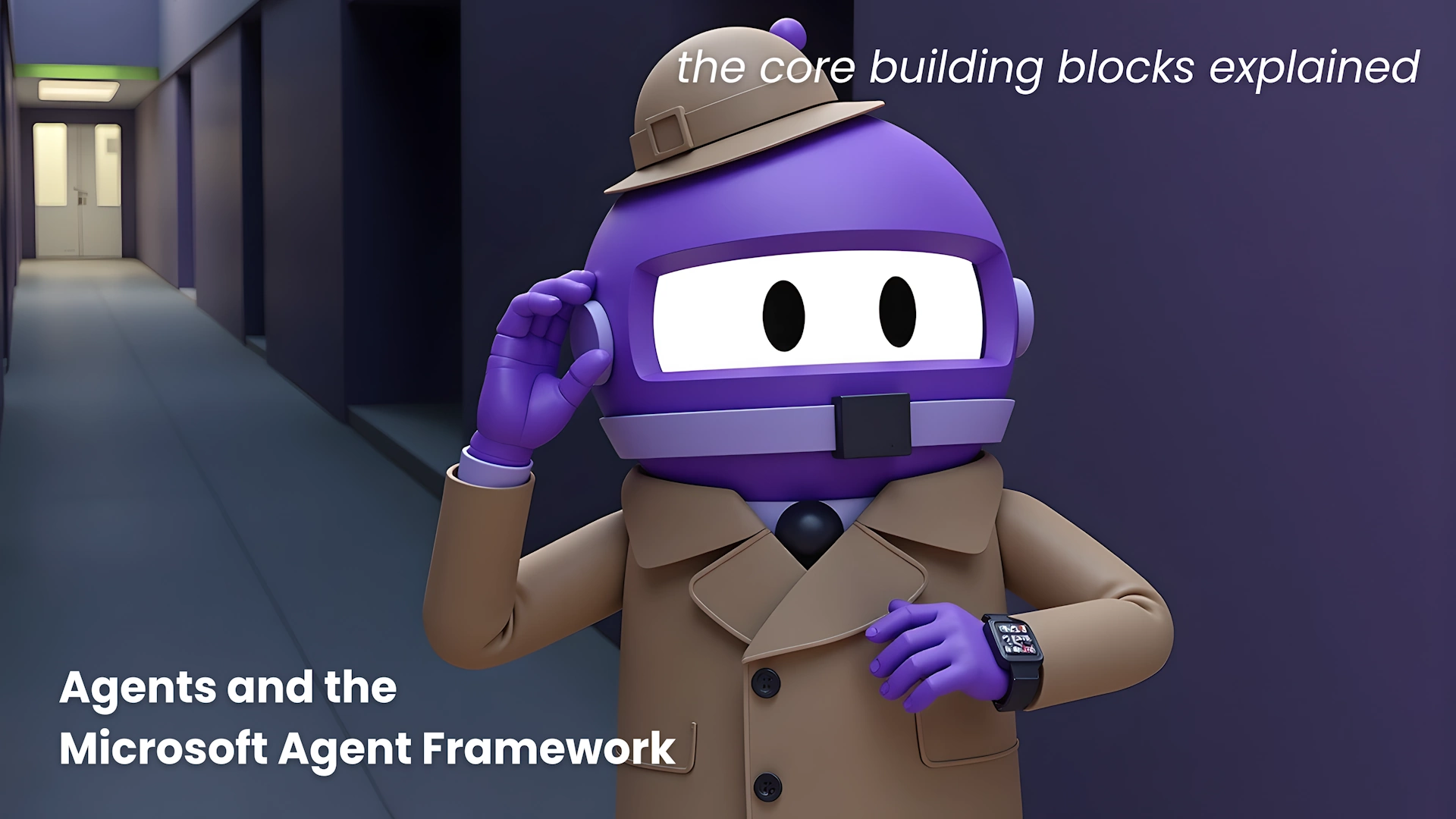
The article presents the Microsoft Agent Framework, a production-ready SDK for developing intelligent agents in .NET. Achieving its 1.0 release in April 2026, the framework enables the creation of agents that can autonomously perform tasks, evaluate results, and coordinate actions using various tools. Unlike traditional chatbots, these agents can reason about tasks and perform complex workflows, supporting scenarios ranging from simple single-agent interactions to intricate multi-agent systems. This third installment in the AI building blocks series builds upon the previously discussed Microsoft Extensions for AI and Microsoft.Extensions.VectorData.
Microsoft .NET AI Blog
Research Corner
AI Coding Tools
The latest Kiro CLI release enhances user experience by allowing connections to more MCP servers, relocating the configuration directory to ~/.kiro, and improving TUI responsiveness for keystrokes. These improvements aim to provide developers with increased flexibility and control over their environments. The version may introduce minor enhancements that streamline operations for users managing multiple servers.
Amazon Kiro Changelog
The article describes a project called GitHub Dungeons, where the author utilized GitHub Copilot CLI to create a procedurally generated roguelike game using a codebase. This unique terminal-based game features dungeons generated from the repository structure, allowing different layouts with every commit and incorporating retro gaming elements like permadeath. Emphasizing procedural generation, the game highlights how rules and randomness can create diverse environments. The project built in Go showcases how GitHub Copilot enhances programming by allowing developers to concentrate on functionality rather than syntax.
GitHub Blog
The GitHub Copilot CLI version 1.0.45 introduces several enhancements, including the new /autopilot command to toggle modes, a fallback to Windows PowerShell when PowerShell 7+ is unavailable, and alignment of OpenTelemetry output with GenAI semantic conventions. Furthermore, the update resolves a session resumption issue, ensuring users no longer face 'Session file is corrupted' errors. Performance improvements are notable, with the CLI starting faster on terminals that have limited OSC color query support, reducing startup time by approximately 1.5 seconds. Additionally, a new /fork command allows users to create a new independent session from the current one.
GitHub Copilot CLI Releases
The release of Semantic Kernel version 1.76.0 introduces several key enhancements and fixes, including improvements in CloudDrivePlugin path validation and new support for ImageContent in tool results. Additionally, the update addresses high-severity vulnerabilities by updating Kiota packages and Snappier to their latest versions. The release also features improvements in input validation for the OpenAPI plugin and adjustments to how function results are logged, ensuring higher quality and security.
Semantic Kernel Releases
JetBrains outlines its future direction for integrating AI with traditional workflows in its IDEs, focusing on enhancing developer productivity and streamlining coding practices. The strategy involves a blend of AI capabilities that will aid in coding along with the existing suite of tools JetBrains provides, with specific functionalities geared towards maintaining code quality and improving developer collaboration. As part of this initiative, JetBrains aims to enhance existing features and introduce new AI-driven tools to support developers across various programming environments.
JetBrains AI Blog
The adamsreview plugin for Claude Code enhances multi-agent pull request (PR) reviews with six commands, significantly improving bug detection compared to built-in review options. It utilizes parallel sub-agents and stores JSON artifacts to manage state between reviews. Users report catching more bugs with fewer false positives compared to standard methods, making it a valuable tool for developers utilizing Claude Code, particularly those on the Max plan. The plugin can be installed through Claude's plugin marketplace.
HN: AI Coding
Anthropic's MCP (Multi-Context Planning) code execution pattern signifies a shift towards allowing agents to manage tool workflows within a controlled runtime environment, rather than embedding all tools directly into prompts. This change aims to enhance efficiency and flexibility in tool interactions for MCP agents. The approach highlights the potential for streamlined operations in AI-driven code execution, fostering improved developer workflows by enabling agents to autonomously discover, filter, and call upon various tools as needed.
Agent Mag
The Chrome DevTools MCP server enables coding agents to interface directly with browser inspection and control, potentially enhancing web debugging processes. This infrastructure is suggested to be treated as a privileged resource rather than a mere connector. The post emphasizes the reliability that could stem from using this tool in team environments, though specific performance metrics or user feedback are not provided.
Agent Mag
Research

Microsoft Research has introduced several advancements related to the MatterSim-v1 model, which included the experimental synthesis of tetragonal tantalum phosphorus (TaP) with a measured thermal conductivity of 152 W/m/K. The team has accelerated model inference by 3-5 times and integrated it with the LAMMPS software for large-scale simulations on multiple GPUs. Additionally, the release of MatterSim-MT, a multi-task foundation model, enables enhanced in silico materials characterization for simulating complex phenomena beyond prior capabilities.
Microsoft Research Blog
Blog & Analysis
The article discusses the deployment of AI tools in Hardware-in-the-Loop (HIL) and Software-in-the-Loop (SIL) workflows with RV Tech and Mercedes. It highlights that AI has helped reduce validation cycle times, automate failure triage, and save thousands of engineering hours monthly, although specific metrics regarding the number of hours saved are not provided. The insights are drawn from practical experiences highlighting the challenges of increasing requirements and ticket volumes against stagnant engineering capacities.
Devin (Cognition) Blog