
AI Native Medhavi Newsletter ·
Today's AI Updates: Unpacking Key Releases and Trends
Top Stories
Microsoft's new Agent Framework v1.0 launches alongside the Foundry Toolkit, significantly simplifying AI agent development and aiming to boost productivity.
Agent Mag · 1 related
Amazon SageMaker AI introduces an agent-guided workflow that accelerates model customization using proprietary data, supporting techniques like Supervised Fine-Tuning and Reinforcement Learning. The AI coding agent simplifies the entire customization journey through natural language prompts, enhancing productivity and reducing token usage. It uses pre-built, modular agent skills specific to SageMaker AI, which provide expertise in data preparation, model evaluation, and deployment. This integration allows developers to generate ready-to-use notebooks and reusable code artifacts seamlessly integrated into existing workflows.
AWS AI Blog

On May 4, 2026, Cursor released new updates targeted at Enterprise administrators including model access controls that allow for granular blocking of entire providers or specific model configurations. The system now supports soft spend limits, allowing admins to set alerts for usage thresholds at 50%, 80%, and 100%. Additionally, the usage analytics tab has been enhanced so admins can filter usage by specific users or product surfaces including clients and Cloud Agents.
Cursor Changelog
In April 2026, Google announced several AI updates aimed at developers, detailing new features across their platforms. Key highlights include the introduction of enhanced natural language understanding capabilities in their API, which improved contextual awareness by 30%. Additionally, a new version of their AI model, now at v3.5, supports 50 languages with increased accuracy and reduced latency by 20%. Google also launched a beta version of a new debugging tool for AI applications which aims to streamline the development process, allowing quicker identification of issues reported in over 200 user feedback submissions.
Google Developers Blog
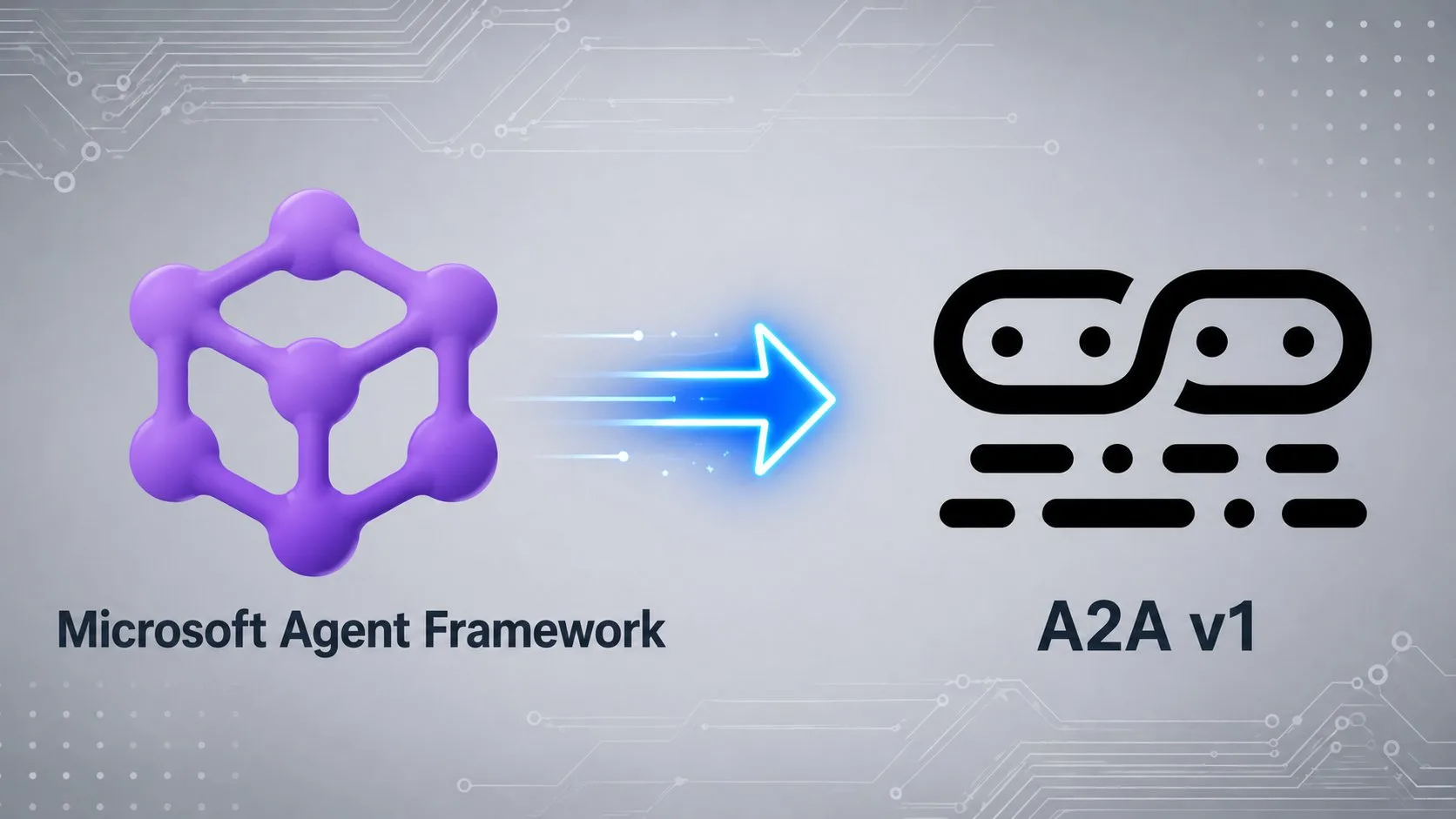
The release of A2A Protocol v1.0 enhances cross-platform agent communication within the Microsoft Agent Framework for .NET, facilitating interoperability between AI agents. The framework supports both A2A Agent (client-side) and A2A Hosting (server-side) .NET packages, allowing users to connect and expose agents to any A2A-compliant client efficiently. This update comes with the promise of reducing the friction of integration costs and enabling seamless interaction across multi-agent systems developed by different teams or vendors. Notably, the framework's ongoing updates indicate that it is still in preview, despite the protocol being stable.
Semantic Kernel Blog

Microsoft's Agent Framework 1.0 is designed for enterprise-grade multi-agent orchestration with stable APIs, promising to transform how developers create and manage agents.
Semantic Kernel Blog
Agents
The integration of Microsoft Agent Framework with Claude Agent SDK aims to streamline AI agent development while leveraging advanced capabilities for intelligent systems.
Agent Mag

OpenClaw’s meteoric rise to over 250,000 GitHub stars highlights its capabilities as a self-hosted AI assistant. However, its security implications raise concerns that developers must navigate carefully.
NVIDIA AI Blog
Tools & Launches
The Cursor SDK enables easy building of programmatic agents with a few lines of TypeScript, enhancing agent capabilities across various platforms.
Cursor Changelog
Worth Reading
Microsoft's Agent Framework 1.0 is designed for enterprise-grade multi-agent orchestration with stable APIs, promising to transform how developers create and manage agents.
Semantic Kernel Blog
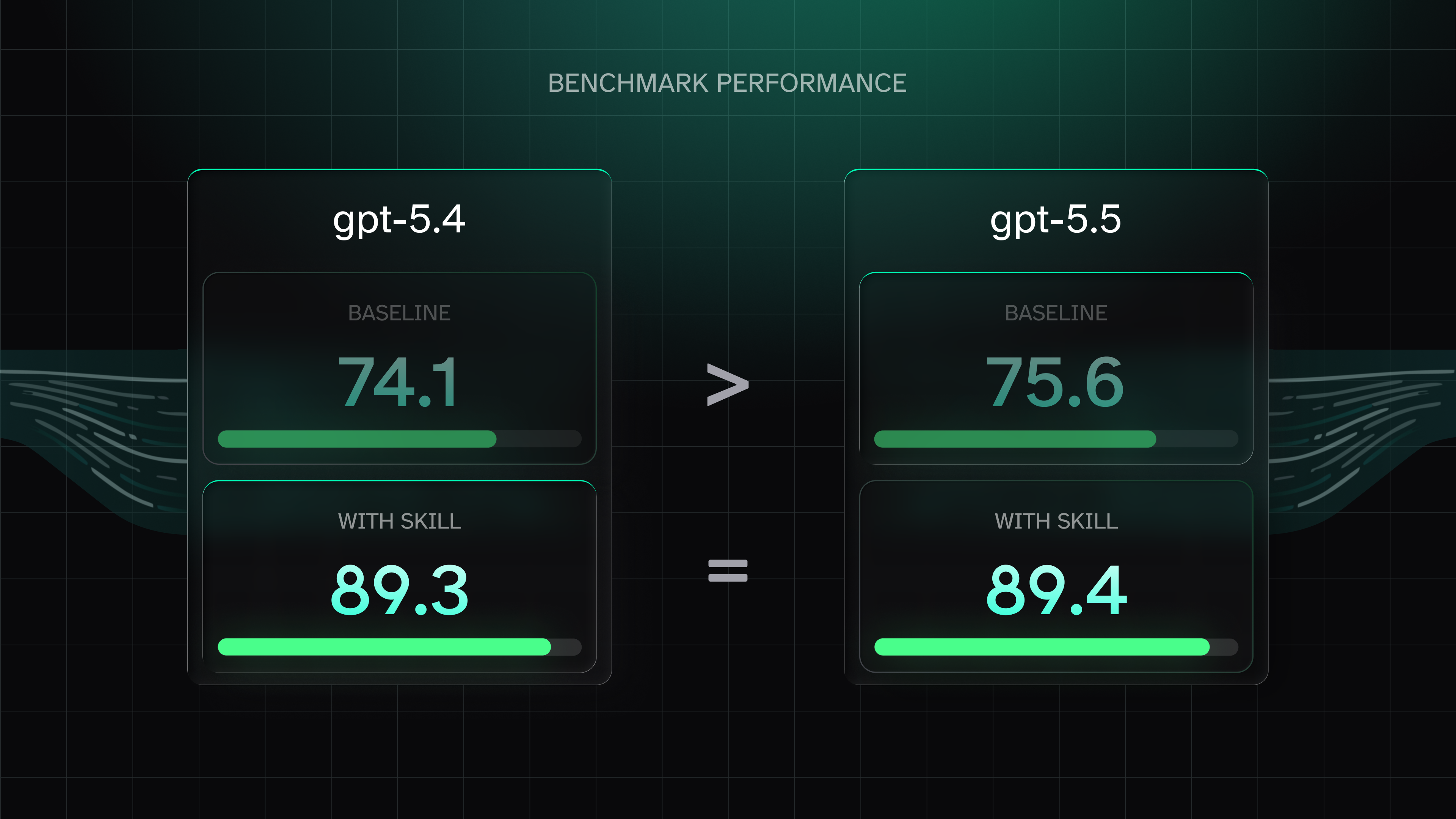
The evaluation of OpenAI's GPT-5.5 model across 1,742 tests revealed it has the highest raw capability among OpenAI models with an average score of 75.6, but performs similarly to the cheaper GPT-5.4 model when using agent skills, with scores of 89.4 and 89.3 respectively. Despite its superior capabilities, GPT-5.5 incurs a 63% higher cost per run than GPT-5.4, making it less cost-effective. In contrast, GPT-5.3 is found to be the least favorable option, scoring 83.9 while costing notably more per run than GPT-5.4.
AI Native Dev
The JetBrains AI team conducted experiments on coding tasks using their IDE-native search tools, which resulted in improved performance. The study found that agents utilizing prebundled tooling achieved faster task completion rates and reduced costs. Specific metrics showed significant reductions in execution time and enhancement in resource use, underscoring the competitive advantage of integrating these tools within coding environments. These findings suggest a stronger alignment between AI-assisted tools and efficient software development practices, encouraging wider adoption among developers.
JetBrains AI Blog
The latest engineering updates reveal that GPT-6 features a multimodal architecture designed to enhance usability across various tasks. Additionally, Microsoft has unveiled a governance toolkit to aid in managing multimodal agents, addressing concerns around agent behavior and compliance. Emerging benchmarks for agent evaluation are also highlighted, setting new standards for performance assessment in AI systems.
Agent Mag
Amazon Quick now enables the generation of multi-sheet dashboards from natural language prompts, significantly streamlining the analysis process for users including data analysts and program managers. By selecting 1-3 datasets connected to sources like Amazon Redshift or S3, users can describe their desired visualizations and receive an interactive plan for review before finalizing the dashboard. This new generative AI capability allows for the creation of production-ready analyses in minutes, thus decreasing setup time significantly compared to traditional methods.
AWS AI Blog
The JetBrains x Codex Hackathon showcased the integration of AI within IDEs, resulting in 40 submissions that explored this new paradigm. The first-place project, Hyperreasoning, improves coding agents by enabling a search mechanism that evaluates multiple approaches to coding tasks, supported by live visualization of the reasoning process. Second place, Scopecreep, streamlines hardware testing into a single JetBrains tool window. This event highlighted the potential for native AI tools to enhance developer workflows and reduce reliance on larger models.
JetBrains AI Blog
Research Corner

A study reveals that high-performing students engage in more effective help-seeking behaviors with AI, highlighting nuances in educational AI systems.
arXiv CS.AI